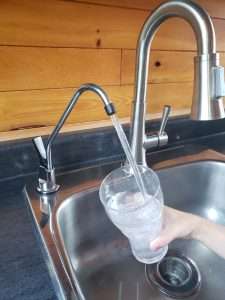
The Anatomy of a Turnkey Water System: From Water Source to Your Kitchen Tap
When people think about getting off municipal water, they usually picture a big drilling rig pounding into the earth like a scene out of Armageddon, a sudden Hollywood splash of water, and—boom—you’re done. Or maybe they think throwing a pump into the pristine lake behind their cottage is a ten-minute DIY job.
If only it were that simple.
In reality, a truly reliable, safe water system is a carefully engineered infrastructure project. Whether your water is coming from a deep bedrock aquifer, a shallow dug well, or straight out of a local lake or river, getting it to your kitchen tap crystal-clear and perfectly safe requires looking at the big picture. We call this a turnkey source-to-filtration process.
From the day we break ground (or hit the water) to the day you take your first carefree sip, is a process that typically takes 4 to 6 weeks, and here is exactly how we make the magic happen, step by step.
Step 1: Establishing the Intake or Well Construction
The journey begins at the source, and we do it all. Depending on your property’s unique setup, geology, and legal restrictions, this looks like one of three things:
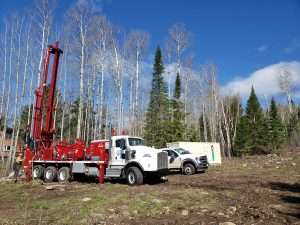
- Drilled Wells: Bringing out the big guns—like a dual rotary rig—to pulverize solid Canadian Shield granite and tap into deep groundwater.
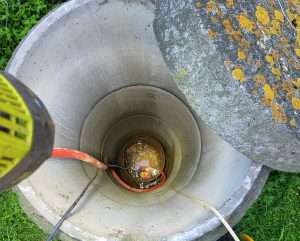
- Dug Wells: Utilizing hydraulic excavators to access shallow water tables, cleanly lined with stacked and sealed, preformed concrete tiles.
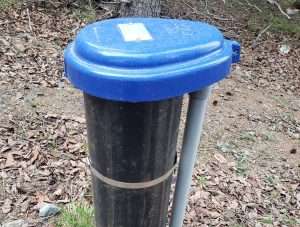
- Surface Water Intakes: Securing a pristine, fully legal, and seasonal pipeline into a neighboring lake or river.
Once the source is constructed and cased or anchored to strict standards, the raw infrastructure is in place. But right now, it’s just raw nature. We need to know what we are dealing with.
Step 2: Testing Quantity and Quality
Before we buy or install a single piece of water supply or indoor treatment equipment, we need hard data. We test your source in two distinct ways:
- Quantitative Testing: For wells, we run an industry-standard pump test to measure yield (how many gallons per minute it can reliably produce). For surface water, we calculate seasonal depth reliability and where turbulence will be minimised.
- Qualitative Testing: We grab samples for a full-spectrum chemistry analysis.
Our goal here is to learn exactly what secrets your water is hiding so we can build a treatment plan tailored specifically to your property.
⚠️ A Quick Reality Check on Pathogens
When it comes to raw water, trying to guarantee a completely pathogen-free source in perpetuity is a nearly impossible standard to satisfy in the field. Lakes have ducks, rivers have runoff, and groundwater tables both fluctuate and can have very complex mixed sources. From a practical perspective, the gold standard for a residential system is to assume you need to protect yourself at the point of entry.
We focus on treating the water inside the building—typically centered around a proper Ultraviolet (UV) disinfection system. But here is the catch: UV lights are not magical sci-fi death rays; they require perfectly clear water to work. If your water has iron, hardness, or sediment blocking the light, the pathogens will literally hide in the shadows and dance right past the bulb. Our chemistry test tells us exactly what pre-filtration is required to ensure that the UV bulb can actually do its job.
Step 3: The Mechanical Hookup (The “Water Supply”)
Once we confirm that your source has enough volume and that the water chemistry is treatable, we move on to the water works portion. This is the mechanical heart of the operation that physically moves the water into your home or facility, including:
- The submersible or distribution pump (lowered into the well, cistern, or wet well setup), or a jet or centrifugal pump that pulls from shallow sources.
- The heavy-duty dropline and torque-resistant electrical conductors.
- A pitless adapter (for wells) to connect the vertical line to your horizontal line safely below the frost line.
- A trenched, freeze-protected horizontal waterline running from the source into the building.
- An indoor pressure tank (and/or a high-tech Variable Frequency Drive [VFD] constant-pressure system) paired with a clean distribution manifold to ensure your shower has actual pressure, rather than a sad, gravity-fed trickle.
Step 4: Filtration and Water Treatment Installation
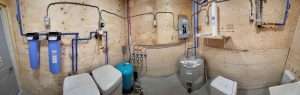
With raw water successfully flowing into the utility room, we install the customized filtration suite we designed back in Step 2. Depending on what your chemistry report flagged, this is where we mount the sediment filters, iron/sulfur oxidation systems, backwashing filters, water softeners, and the final UV disinfection system.
Step 5: Plumbing Adjustments, System Testing, and Schooling
We don’t just bolt units to the wall, scream “Good luck!”, and throw you the bill. Our team will adjust your existing indoor plumbing to seamlessly integrate the new system, pressuring everything up for a rigorous final test to ensure there are zero leaks and optimal flow.
Finally, we walk you through your new setup. We believe a homeowner or commercial operator should never be left guessing, so we provide complete instructions, including a practical, hands-on demonstration of how to change your first round of filters and replace the UV bulb when the time comes. We will always be available down the road, to help you with an issue over the phone and or service your system as required.
What Happens When Nature Doesn’t Cooperate?
We’ve said it before and we will say it again: there are no guarantees underground (or overground).
If we drill a well and hit natural gas, encounter severe man-made or natural contaminants (like heavy arsenic, uranium, iron, manganese, or salt), or if a well’s physical production looks like a dripping kitchen faucet, the playbook changes.
When a source defies the local average, we don’t just walk away and leave you stranded. We may alter the well depth, transition the strategy to a lake-intake or a large holding cistern system, install specialized mitigation equipment (like an Airwell™ Radon & Gas Mitigation System), or work directly with regional environmental and government authorities alongside you to investigate what happened and fix it.
Beyond the Home: Ongoing Operations & Compliance
From full-service, turnkey residential systems like this to any single element of the process, we truly do it all. But our work doesn’t stop at the kitchen tap of a private home.
For businesses, corporations, and organizations navigating provincial water regulations, or even homeowners who do not have the time or energy to maintain their systems, we can step in as a long-term partner. If your property has regulated drinking water requirements—such as a school, community center, restaurant, group home, summer camp, lodge, or a community-shared well—the final step of your process isn’t just installation; it’s ongoing compliance and management, what the industry calls, Water Treatment Plant Operations.
For clients operating under Reg. 170 or Reg. 319, or any larger commercial footprint that requires specialized oversight, we can serve as your full-service licensed operator or partial consultant. Because we are fully licensed and insured to operate everything up to small municipal systems of 100 homes or less, as well as any designated facility, we ensure your infrastructure stays safe, efficient, and fully compliant with the law.
For those that require it, we also help regular homeowners out with seasonal starts and stops to their cottage (camp) properties, as well as maintain the filtration systems of many year round homes whose owners would prefer to have a professional take care of it.
Building a turnkey water system requires patience, but doing it right ensures your asset protects your health—and your organization—for decades to come.
Are you planning a new build, upgrading a legacy well, hooking up to the lake, or looking for a certified operator to manage a regulated system? Let’s take a look at your property’s data together and build a system that keeps the water flowing and the regulators happy.