Types of Wells and Construction Methods in Northwestern Ontario
When you are planning a water well system, it helps to understand that a well is not just a hole in the ground—it is a carefully engineered structure. Under Ontario Regulation 903 (Reg. 903), water wells are strictly defined and regulated based on how they are constructed and cased.
In Northwestern Ontario’s diverse and challenging terrain, wells fall under two primary structural umbrellas: Large-Diameter overburden surface water wells and Small-Diameter ground water wells. Let’s break down every major method used to source water, what works in our region, and what you should avoid at all costs.
1. Large-Diameter Wells (Shallow & Overburden Aquifers)
Large-diameter wells target shallow water tables located in the “overburden”—the layers of soil, sand, silt, and clay sitting above the solid bedrock. Because shallow earth yields water more slowly, these wells have a wide diameter to act as an underground storage reservoir.
Method A: Excavated / Dug Wells
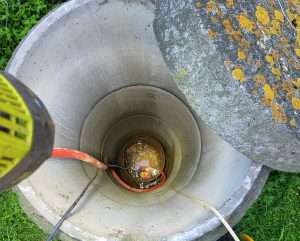
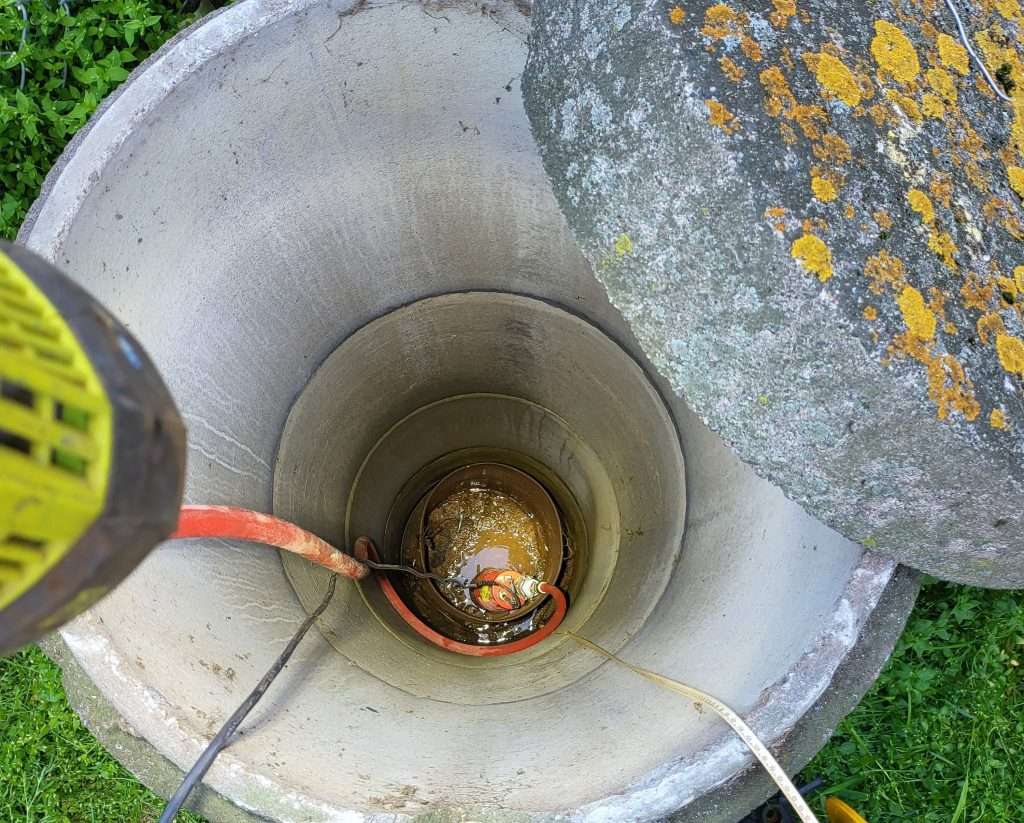
The modern standard for large-diameter wells in our region involves heavy hydraulic excavators digging down to the water table. The borehole is then lined with stacked, commercially manufactured, preformed concrete tiles (usually 3 to 4 feet in height). This method accounts for about 10% of new wells in our area.
Be warned: Because hydraulic excavators and operators are so easy to find locally, many heavy equipment operators think they can construct a water well for you. This is a massive risk. Only licensed Class 2 Well Constructors are legally permitted to build wells using this method. They must follow incredibly strict specifications to minimize harm to you, your property, and the water table.
Subsurface water table accidents can easily climb into the million-dollar range for environmental cleanup. Your contractor must have the proper provincial licensing and specific environmental insurance. If you fail to confirm these credentials before they dig, you are entirely on the hook financially. While there is absolutely nothing wrong with a Reg. 903-compliant dug well, a non-compliant well is incredibly dangerous to your health and your neighbors’ safety.
Method B: Bored Wells
When a wide-diameter well is needed but the water-bearing sand or clay layer is too deep for a standard excavator to safely reach, a bored well is used. Constructed using large, machine-driven bucket augers, these rigs can penetrate deeper into tight, low-yield silt or fine sand formations to maximize surface area contact.
Method C: Legacy Large-Diameter Systems
If you have an older wide well that does not use concrete tile, it is a historical artifact. These include old-school cribbed wells lined with timber, brick, or loose stone, as well as corrugated galvanized pipe wells. By modern sanitary standards, these are rarely worth keeping due to severe surface contamination risks.
2. Specialized Hollow-Stem Auger Wells
Hollow-stem auger rigs use continuous flight augers with a hollow center column. Mechanically, the auger flights act as a temporary casing to hold back weak, caving soils (like loose sand and wet clay) while drilling.
Once the machine reaches the target depth, drillers can drop a small-diameter well screen and pipe straight down the center of the hollow stem before withdrawing the auger. While these machines are primarily used for soil sampling and geotechnical or environmental monitoring investigations, it is entirely possible to construct a safe, functional residential drinking water well with them, provided it is meticulously built to Reg. 903 standards.
3. Small-Diameter Wells (Deep Overburden & Bedrock Aquifers)
Small-diameter wells (typically 4 to 6 inches across) pass completely through the loose surface soils to tap into deep, confined aquifers or the water-bearing fractures found within solid bedrock.
Method A: Rotary Drilled Wells (The Industry Workhorses)
Rotary drilling is the absolute backbone of modern well construction, but the specific type of rotary rig matters immensely depending on your regional geology:
- Down-the-Hole (DTH) Air Hammer Drilling: This is the machine that truly brought drilled wells to Northwestern Ontario. It uses high-pressure compressed air to drive a pneumatic hammer bit that pulverizes solid Canadian Shield granite. Roughly 95% of the existing drilled wells in our region were constructed with various types of these machines.
- Mud Rotary / Drag Bit Drilling: This method circulates thick bentonite fluid down the hole to force open loose sands and silts. While it is used heavily in regions with incredibly deep overburdens—like the Canadian Prairies—it is absolutely not an ideal machine for the geology of Northwestern Ontario.
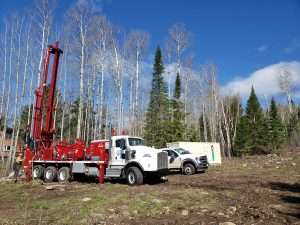
- Dual Rotary (DR) Drilling: The absolute gold standard for mixed, brutal terrain. A Dual Rotary rig utilizes top-drive and lower-drive units operating simultaneously to rotate and advance the heavy steel outer casing while drilling. It is the new workhorse of well drilling across Canada and the US. It handles shifting overburden vastly better than a mud rotary rig, and the second it encounters bedrock, it hammers through it like any other rotary rig. It is the perfect machine for Northwestern Ontario.
Method B: Diamond Core Drilled Wells
Ancillary products of the mining exploration industry, these historic 2-inch diamond bores still litter our region from operations active between the 1950s and 1970s. Most have thankfully been decommissioned and replaced.
Because of their narrow 2-inch diameter, they can generally only function with a complicated, temperamental, and increasingly rare type of pump system called a two-line jet pump (which extends a venturi device down to the bottom of the bore to overcome standard gravity limitations). We rarely recommend keeping these wells. Our company has converted hundreds of these properties over to modern 6-inch wells. The good news is that if a historical 2-inch bore successfully supplied your house, it is highly likely we can find the same water flow—if not better—at that same depth with a modern rig.
Method C: Driven-Point, Jetted, & Sonic Wells
- Traditional Driven Points (Sand Points): This involves manually or mechanically hammering a screened pipe into shallow, highly permeable sand beds. While washing or driving in a sand point is a trick that works in a few unique waterfront areas of Northwestern Ontario, our general regional geology does not allow for it. If you are interested to see if your lot qualifies, call us and we can look up the data.
- Sonic (Vibratory) Wells: These rigs use high-frequency resonance to cut through the ground mechanically without drilling fluids or heavy hammer tracks. While they work brilliantly on soft shales, they are a complete waste of time and money in our region. The second a sonic head hits anything dense, it slows down to an uneconomical crawl—and dense rock makes up 99% of our local geology and 95% of what we have to drill through to get water.
4. Unlawful, Obsolete, and Misused Methods
Modern equipment has made certain historical practices obsolete, dangerous, and illegal under provincial law.
Illegal Catchment Methods
Cribbing, excavating tiles, or building collection walls directly into natural, open bodies of surface water to act as a “well” is completely illegal. While pulling surface water in this way made sense before modern equipment existed, we now have safer, cleaner ways to secure drinking water. This method is dangerous to your health and harmful to the environment.
Blasting Wells
“Yosemite Sam” style well blasting with explosives was an actual historical method used in our region. Drillers would blow up dynamite down a hole to shatter existing weak points in wet bedrock formations, hoping that once cleared, the void would fill up like a water well. Today, it is highly expensive, incredibly illegal, and a highly unproductive method of well construction compared to standard modern drilling.
Directional Drilling for Water Wells
Directional drilling is an incredible piece of modern technology that utility planning can no longer function without—it is fast, efficient, and perfect for running underground hydro lines or geothermal loops. However, directional drilling should never be used to construct a water well. Directional drill rigs cannot comply with the construction, casing, and sealing requirements mandated by Reg. 903. Attempting to use them to construct a water delivery system—especially out into lake and river systems—creates a final product that damages the local water table and is virtually impossible to safely decommission down the road.
Be warned: if you hire a directional driller to bootleg a water line straight out into a lake, you are legally and financially liable for the long-term harm done to your neighborhood’s water table. This is in addition to whatever costly remediation orders Fisheries and Oceans Canada (DFO), the local Conservation Authority, the Ministry of Natural Resources (MNR), and the Ministry of the Environment, Conservation and Parks (MECP) force you to undertake to correct the violation. We are not the water police, and we won’t rat you out—your neighbors will do that for us. Protect your wallet and your property by doing it right.
Additionally, the risk from ice, wind, floating and sicking trees, anchors, sand changes, etc, make the lifespans of these systems something in the range of months to a few years – eventually they are torn out, pop out, become crushed, or plug. There is no maintenance or repair option, and when they are ripped or pop out your neighbours water table can be impacted, sometimes permanently, by the event.